Hidden Gems Found in Local Card Shops and Online Auctions

Scouring Local Game Stores
The Digital Treasure Hunt
Recognizing Mispriced Listings
This post identifies specific types of undervalued trading cards you can find in local game stores (LGS) and online auctions. You'll learn how to spot mispriced assets, identify high-potential vintage sets, and understand the specific market signals that separate a junk box from a gold mine.
Where Can You Find Undervalued Trading Cards?
The best places to find undervalued cards are local game stores with high turnover and online auction sites where sellers lack specialized knowledge. While big-box retailers or high-end auction houses offer security, they rarely offer the "find" of a lifetime because their pricing is already optimized. To find real value, you need to go where the information asymmetry is highest.
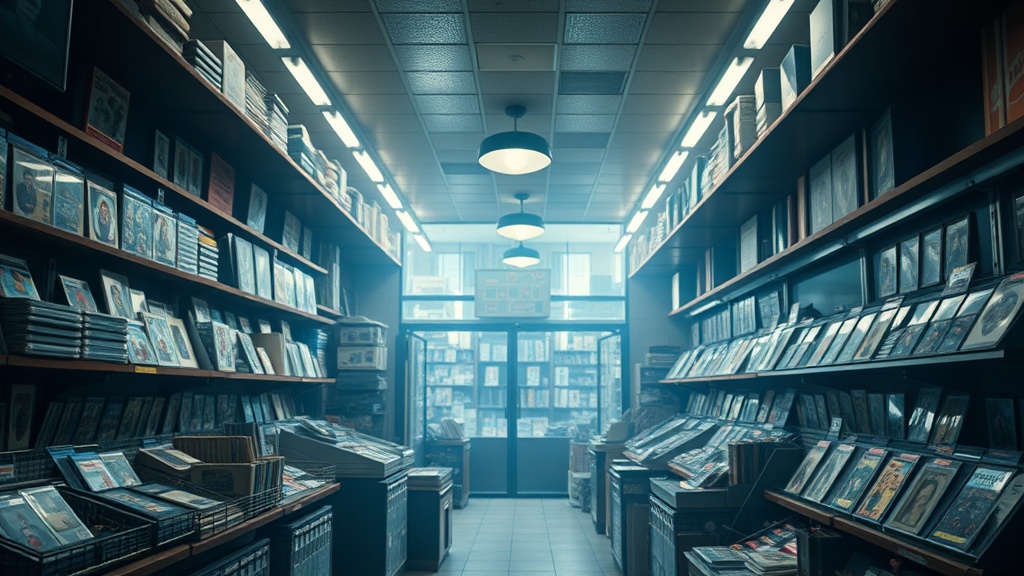
Local shops in smaller towns or outskirts of major cities—think outside the Hamilton bubble—often have "bulk bins" that haven't been updated in years. These shops might still be pricing cards based on old tournament metas or outdated price guides. It's a different game than browsing a curated storefront on TCGPlayer or Card Kingdom. You're looking for the shopkeeper who knows a lot about the community but maybe isn't an expert on the latest digital meta-shifts.
Online auctions, particularly on sites like eBay, offer a different kind of opportunity. You aren't looking for the "mint condition" listings. You're looking for the "unsearched" collections or "bulk lot" listings. When a seller lists a "Box of Magic: The Gathering Cards" without a specific inventory, they are essentially selling you a mystery box. That's where the profit margins live.
Keep an eye on the history of trading card games to understand which eras are currently "out of fashion." A set that was once incredibly expensive but has since cooled down can be a prime target for a long-term hold.
What Types of Cards Are Currently Undervalued?
Undervalued cards usually fall into three categories: "bulk" cards from recent sets that are actually playable, vintage cards with poor condition-grading, and niche-set cards that lack mainstream visibility.
I've seen many collectors overlook the "bulk" bins in local shops because they assume the cards are worthless. But a card's value isn't just about its rarity—it's about its utility. A common card in a new expansion might be worth pennies today, but if a new professional deck archetype emerges tomorrow, that card's value can spike. It's a gamble, sure, but it's a calculated one if you track the meta.
Here is a breakdown of what to look for in different categories:
| Category | What to Look For | The Risk Factor |
|---|---|---|
| Recent Expansions | Low-rarity cards with high utility in specific formats. | High (Meta shifts quickly). |
| Vintage/Old School | Mid-tier rares from the 90s that aren't "chase" cards. | Medium (Condition is everything). |
| Unsearched Lots | Large quantities of cards sold as "bulk" or "unsearched." | Very High (You might get nothing). |
| Niche TCGs | Games like Pokémon or Yu-Gi-Oh! that have "dead" eras. | Medium (Niche markets can be volatile). |
One thing to remember: a card's value is often tied to its physical state. A card that looks "beat up" might be a high-value card that was simply poorly stored. If you're serious about this, you'll need to understand how to store and protect your trading cards to ensure that once you find them, they don't degrade in value.
How Much Does a Card Collection Actually Cost to Start?
The cost of starting a collection varies wildly depending on whether you are buying individual cards or large bulk lots. You can start with as little as $20 for a handful of singles, or you can spend thousands on high-end vintage collections.
If you're just starting, don't go out and buy a $500 "mystery box" from a random person on the internet. That's a fast way to lose your shirt. Instead, spend your money on specific, high-demand singles. It's much more predictable. If you want to build a foundation, look at the process of building a collection that gains value. It's about being surgical, not reckless.
A lot of people think they need to buy "the best" to have a good collection. That's a mistake. The best way to build value is to buy the "undervalued" stuff. This means looking for:
- Cards with high playability but low "hype" value.
- Sets that are currently undergoing a "renaissance" in popularity.
- Bulk lots from collectors who are liquidating their collections quickly.
The price of entry for a "serious" collection is much higher than a "hobbyist" collection. A hobbyist might spend $50 a month on fun packs. A serious collector is looking at the long-term-value-to-risk ratio of every single purchase. It's a different mindset entirely.
Wait, don't forget about the "condition" tax. If you buy a lot of cards at an auction, you're likely paying a lower price because the condition is unknown. This is where your ability to grade—even informally—becomes your biggest asset. You aren't just buying a piece of cardboard; you're buying a specific grade of that cardboard.
It's worth noting that many people ignore the "middle-tier" cards. They either want the $1,000 "Holy Grail" or the $0.10 "Bulk." The middle—the $10 to $50 range—is actually where the most interesting opportunities live. These cards are often overlooked by the big-scale professional buyers, leaving plenty of room for the independent collector to find profit.
If you're looking at vintage cards, you'll need to be extremely careful about counterfeits. The more expensive the card, the more likely it is to be a fake. Always check the edges, the light transparency, and the texture of the card. It's a skill that takes time to master, but it's one that pays off in the long run.
On the flip side, the most profitable way to grow a collection isn't just buying—it's selling. Once you've identified a trend or a specific undervalued card, you have to know when to exit. Don't get married to your cards. They are assets, not family members. If the market is peaking, sell. If the meta has moved on, sell.
I've spent years looking at these cycles. Sometimes you'll get it right, and sometimes you'll get it completely wrong. That's part of the game. The goal is to be right more often than you're wrong. That's how you build a collection that actually has a future.