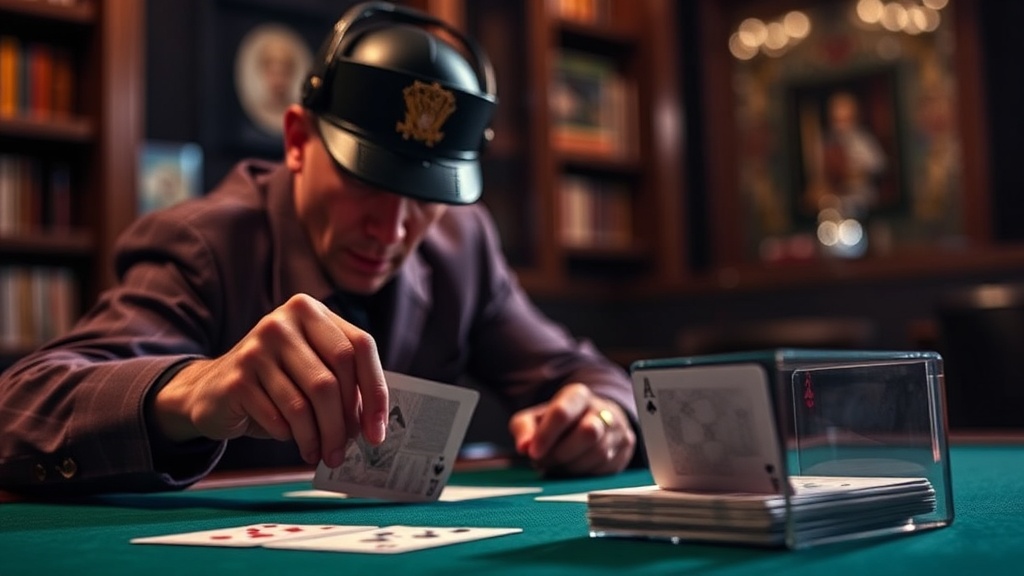
The Evolution of Card Grading and Professional Standards

A collector holds a high-end vintage card up to a bright desk lamp, squinting at a microscopic speck of white on a corner. They've spent weeks debating with an online forum group about whether that speck constitutes a "surface imperfection" or a "printing flaw." This tiny ambiguity can mean a thousand-dollar difference in market value. This post looks at how the standards of card grading have shifted from subjective hobbyist opinions to a highly technical, data-driven industry.
We're looking at the transition from local grading to the global-scale professional standards used by companies like PSA, BGS, and CGC. Understanding these shifts helps you make better decisions when buying or selling high-value assets. It isn't just about a number on a slab; it's about the math and the technology behind the grade.
Why is professional card grading so important?
Professional grading provides a standardized, third-party verification of a card's physical condition to ensure market liquidity and trust. Without a neutral authority, every buyer and seller would be locked in a constant cycle of disagreement over a card's state. A grade acts as a universal language. When a card is labeled a PSA 10, the market understands exactly what that means regarding centering, edges, corners, and surface.
In the early days of the hobby, grading was often a "gut feeling." A person with a magnifying glass would look at a card and decide if it was "mint" or "near mint." That worked when the market was small. Now, with millions of dollars moving through auction houses, that subjectivity is gone. We've moved into an era of high-stakes precision.
The rise of the "slabbed" card changed everything. A slab isn't just a protective case; it's a certificate of authenticity and a grade. It allows collectors to trade cards across borders without needing to see the physical item in person. This level of trust is what allows the secondary market for products like Magic: The Gathering or Pokémon to function at such a high level.
One way to maintain this value is through proper storage. If you're looking to protect your cards before they even hit a grading service, you should look into preserving your legacy in magnetic one-touch holders. Proper housing prevents the very damage that lowers grades in the first place.
The Four Pillars of Grading
Most professional services break a card down into four specific categories. If one of these fails, the entire grade drops. It's a rigid system.
- Centering: How well the image is centered within the borders. This is often the most scrutinized aspect in high-end grading.
- Corners: The sharpness and integrity of the four corners. Even a microscopic "whitening" can drop a grade.
- Edges: The smoothness of the sides of the card. This includes checking for chipping or fraying.
- Surface: The face of the card. This covers scratches, dimples, ink stains, or even print lines.
How do grading companies determine a card's value?
Grading companies use a combination of high-resolution digital imaging, specialized lighting, and strict proprietary-scale rubrics to assign a numerical value. While many people think it's just one person looking through a lens, modern high-end grading often involves multi-spectral analysis to find flaws invisible to the naked eye. For instance, UV light can reveal hidden surface scratches or traces of adhesive that a standard light wouldn't catch.
The process is essentially a way to quantify the "perfection" of a manufactured object. Because a printing press can only produce a certain amount of "perfect" cards, the grading scale reflects the rarity of that perfection. A "Gem Mint" card is rare because it is a statistical outlier in the production run.
It's worth noting that the grading industry isn't a monolith. Different companies have different "personalities." Some are known for being "tough" (meaning they give lower grades more easily), while others are seen as more "generous." This creates a complex market where a PSA 10 might be worth significantly more than a BGS 9.5 for the exact same card.
| Grading Service | Primary Reputation | Best For |
|---|---|---|
| PSA | High liquidity/Gold standard | Vintage Sports & Pokémon |
| BGS (Beckett) | Detailed sub-grades | High-end Magic & Sports |
| Modern precision | Modern TCGs & Comics |
The goal isn't just to find flaws. It's to establish a ceiling. Once a card is graded, its potential is capped. You can't "re-grade" a card to make it better; you can only hope it meets the standard the first time. This creates a massive incentive for collectors to use high-quality protection from day one.
What are the common mistakes in card grading?
The most common mistakes involve improper handling, poor storage, and a misunderstanding of how environmental factors affect card integrity. Many collectors don't realize that even "clean" hands can transfer oils that eventually degrade the surface of a card. This is why many professionalists insist on using gloves or specialized tools.
Here is a list of common pitfalls that lead to lower grades:
- Improper Sleeve Usage: Using low-quality sleeves that don't provide a true barrier against moisture or oils. (If you want to see the difference, check out how to keep your sleeves crystal clear).
- Humidity Exposure: Storing cards in environments that aren't temperature-controlled, leading to "warping" or "curving."
- Poor Centering Awareness: Not checking the borders before sending a card to a grading service.
- Improper Handling: Touching the surface of a card directly, which can leave invisible fingerprints that show up under UV light.
I've seen collectors send in cards that look perfect to the naked eye, only to have them returned with a grade of 6 or 7. Usually, it's because of a "surface" issue—a tiny print line or a microscopic scratch from the factory itself. It's a harsh reality of the hobby. The machine is much more unforgiving than the human eye.
The industry is also seeing a push toward automation. Companies are increasingly using AI and high-resolution sensors to standardize the process. This reduces human error and, more importantly, reduces the "human element" of bias. If a machine can detect a 0.1mm deviation in centering, it's much more reliable than a person with a ruler. This is a massive shift in how we define "quality" in the collectible space.
If you're looking for more technical-grade information, the Wikipedia page on Trading Card Games offers a great historical context on how these games evolved from simple playthings into the high-value assets they are today.
The evolution of grading is really the evolution of the market itself. As the items become more valuable, the scrutiny must become more intense. We've moved from a hobby of "collecting cards" to an asset class of "trading cards." The distinction is subtle, but the economic implications are massive. Whether you are a casual player or a high-end investor, understanding these standards is the only way to protect your capital.