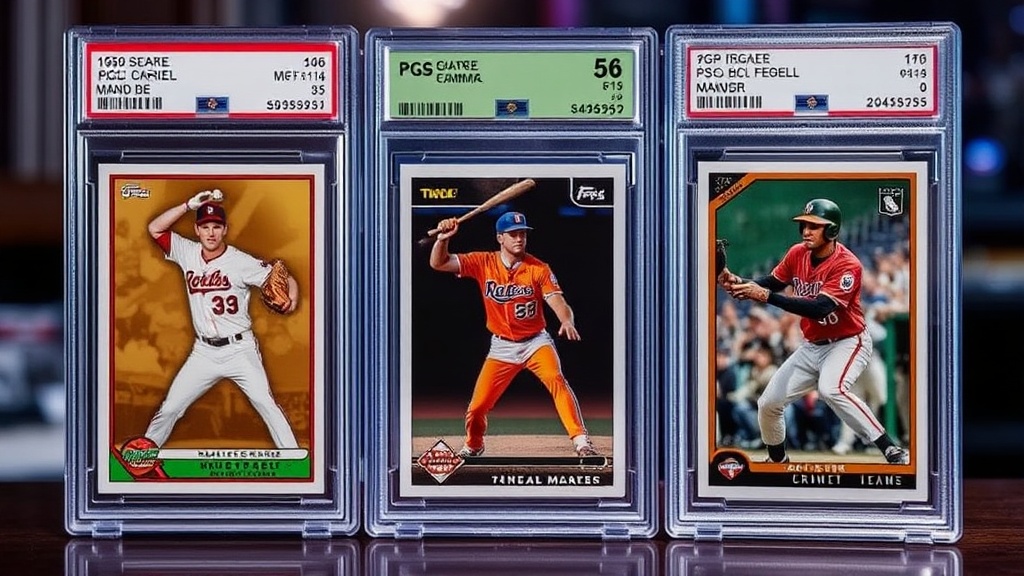
Complete Guide to Trading Card Grading: PSA, BGS, and CGC Compared

This guide breaks down everything you need to know about professional trading card grading — comparing PSA, BGS, and CGC head-to-head. Whether you've got a raw Black Lotus sitting in a shoebox or a stack of Pokémon cards from childhood, understanding grading helps you protect value, authenticate collectibles, and make smarter buying decisions in a market where condition means everything.
What Is Trading Card Grading and Why Does It Matter?
Trading card grading is the process of having a professional third-party company evaluate a card's condition, assign it a numerical grade, and seal it in a protective plastic slab. The grade — typically on a 1-10 scale — reflects the card's centering, corners, edges, and surface quality.
Here's the thing: grading isn't just about bragging rights. A graded card typically sells for significantly more than its raw counterpart. A Charizard Base Set in PSA 9 condition might fetch $500, while the same card ungraded struggles to hit $200. The slab guarantees authenticity (no fakes) and condition (no surprises).
For Magic: The Gathering collectors in Hamilton and across Canada, grading has become standard practice for high-value cards. The Professional Sports Authenticator (PSA) alone has processed over 40 million cards since 1991. That's not a trend — that's the market.
PSA vs BGS vs CGC: What's the Difference?
PSA, BGS (Beckett Grading Services), and CGC (Certified Guaranty Company) are the three major players in trading card grading, each with distinct grading standards, slab designs, and market preferences. PSA leads in market share and resale value. BGS is known for stricter standards and subgrades. CGC has gained traction with modern cards and comic collectors crossing over.
The catch? Not all 9.5s are created equal. A BGS 9.5 "Gem Mint" card often requires better centering and corners than a PSA 10. Meanwhile, CGC uses a 10-point scale with half-point increments — 9.5, 9.0, 8.5 — giving more granular feedback on condition.
Grading Scales at a Glance
| Company | Scale | Top Grade | Subgrades Available |
|---|---|---|---|
| PSA | 1-10 | Gem Mint 10 | No (overall only) |
| BGS | 1-10 | Pristine 10 | Yes (4 categories) |
| CGC | 1-10 (with half points) | Perfect 10 | Yes (4 categories) |
Worth noting: PSA 10s generally command the highest resale premiums in the current market. A PSA 10 Liliana of the Veil from Innistrad sells faster — and often for more — than a BGS 9.5 equivalent. That said, BGS Black Label 10s (all subgrades at 10) are considered the holy grail and can outperform PSA 10s in certain categories.
How Much Does Card Grading Cost in 2025?
PSA, BGS, and CGC each charge different rates depending on turnaround time, card value, and membership status. Expect to pay between $15 and $300 per card depending on service level and declared value.
For standard economy service — the option most collectors choose — here's what you're looking at:
- PSA: $15-25 per card (bulk submissions, 50+ cards, slower turnaround)
- BGS: $20-35 per card (economy tier, no subgrades)
- CGC: $15-25 per card (standard tier, includes subgrades)
Subgrades — the breakdown of centering, corners, edges, and surface — typically add $10-15 per card at BGS and CGC. PSA doesn't offer subgrades at all, which frustrates some collectors but keeps their process streamlined and (theoretically) consistent.
The real cost isn't just the grading fee. It's shipping (insurance adds up), membership fees (PSA requires Collectors Club membership for most service levels), and the opportunity cost of waiting. Economy service can take 3-6 months during busy periods. If you need that Mox Pearl graded for an upcoming GP Toronto — plan ahead.
Which Grading Company Is Best for Magic: The Gathering Cards?
PSA is generally the best choice for Magic: The Gathering cards intended for resale, while CGC works well for personal collections and modern cards where subgrade visibility matters. BGS occupies a niche for ultra-high-end pieces where condition perfection justifies the premium.
The Magic market has spoken — PSA slabs move faster on Facebook groups, eBay, and at Canadian shops like Face to Face Games in Toronto. Collectors trust the PSA 10 designation. It's recognizable. It's liquid.
That said, CGC has made serious inroads. Their slabs are crystal-clear (no frostiness), their labels look sharp, and they grade Magic-specific issues — print lines, factory flaws — with nuance that PSA sometimes misses. For cards from recent sets like Modern Horizons 3 or Bloomburrow, CGC offers excellent value.
BGS? Reserve Beckett for the crown jewels. The Alpha Black Lotus. The Serialized Ragavan. Cards where a BGS 9.5 or (dream scenario) Black Label 10 becomes part of the card's story. For your typical dual land or fetchland? PSA or CGC makes more financial sense.
Quick Reference: Choose PSA If...
- Resale value and liquidity matter most
- You want the most recognized brand in the hobby
- You're grading vintage Magic (Alpha, Beta, Unlimited)
- You don't care about subgrade breakdowns
Choose CGC If...
- You want subgrades without paying BGS premiums
- Clear slab aesthetics appeal to you
- You're grading modern cards (2020-present)
- You appreciate detailed feedback on why a card got its grade
Choose BGS If...
- You're chasing the Black Label 10 (all 10 subgrades)
- The card is worth $1,000+ and condition perfection is everything
- You want the most rigorous grading standards in the industry
Should You Get Your Cards Graded?
Grade cards worth $50+ in mint condition, cards with authentication concerns, or pieces destined for long-term storage. Don't grade beat-up cards, bulk commons, or anything where grading costs exceed 20% of the card's potential value.
Here's a simple rule: if the grading fee ($20-30 with shipping) represents more than 20% of what the graded card would sell for, skip it. A $40 card in PSA 9 condition isn't worth the investment. A $400 card? Absolutely.
Also consider condition honestly. Be brutal. That Underground Sea looks mint in a sleeve — under a jeweler's loupe, it probably isn't. PSA 10s represent less than 5% of cards submitted. The odds aren't in your favor. If the card shows edge wear, surface scratches, or corner whitening, grading might just confirm what buyers already suspect: it's played condition.
For Canadian collectors, factor in cross-border complications. PSA's Canadian drop-off location (in Ontario) helps, but you're still dealing with USD pricing and potential customs delays. CGC Comics & Cards offers Canadian-friendly pricing and faster turnaround for north-of-the-border submissions — a legitimate consideration.
Preparing Cards for Submission: A Checklist
Before sealing that envelope to PSA, BGS, or CGC, run through this process. It saves headaches — and rejected submissions.
- Inspect under magnification. Use a 10x jeweler's loupe or strong LED light. Look for surface scratches, print dots, and edge wear invisible to the naked eye.
- Clean carefully. Microfiber cloth for surfaces. Soft brush for edges. Never use liquid cleaners — residue damages cards and voids grading guarantees.
- Handle by edges only. Finger oils leave residue. Grading companies deduct for "fingerprint smudges" on glossy surfaces.
- Use card savers, not top loaders. All three companies prefer Card Saver I semi-rigid holders. Top loaders can crack during shipping and damage corners.
- Document everything. Photograph cards before submission. Note serial numbers. Insure your package — USPS, FedEx, and Canada Post all offer declared value coverage.
One more thing: declare accurate values. If you submit a $2,000 card as a $50 card to save on grading fees, and it gets damaged or lost, you're out $1,950. Honesty protects you.
Understanding the Grading Process Timeline
From mailbox to slab, expect 2-6 months depending on company and service tier. PSA's economy service currently averages 3-4 months. CGC moves faster — often 4-6 weeks for standard submissions. BGS falls somewhere in between, though their turnaround times fluctuate more than competitors.
What happens during those weeks? Cards are logged, authenticated (crucial for vintage Magic where counterfeits circulate), and evaluated by multiple graders. PSA uses a single grader plus verification. BGS and CGC use multiple graders independently, then average scores for the final grade.
The slab itself matters. PSA's classic red label dominates eBay thumbnails. CGC's blue label pops against dark cards. BGS's silver label with gold text screams premium. Each slab includes the grade, card details, and a serial number you can verify online.
"Grading transformed the collectibles market from a handshake and a prayer into something verifiable. It's not perfect — graders are human — but it's infinitely better than the alternative." — Heritage Auctions, 2024 Market Report
At the end of the day, grading is a tool. Use it wisely for cards that deserve protection and authentication. Skip it for bulk. Understand that grades — like markets — fluctuate. A PSA 10 today might face tougher standards in 2026. Collect what you love, grade what matters, and remember that a 9.5 still represents a card in exceptional condition. The numbers matter, but they don't tell the whole story.