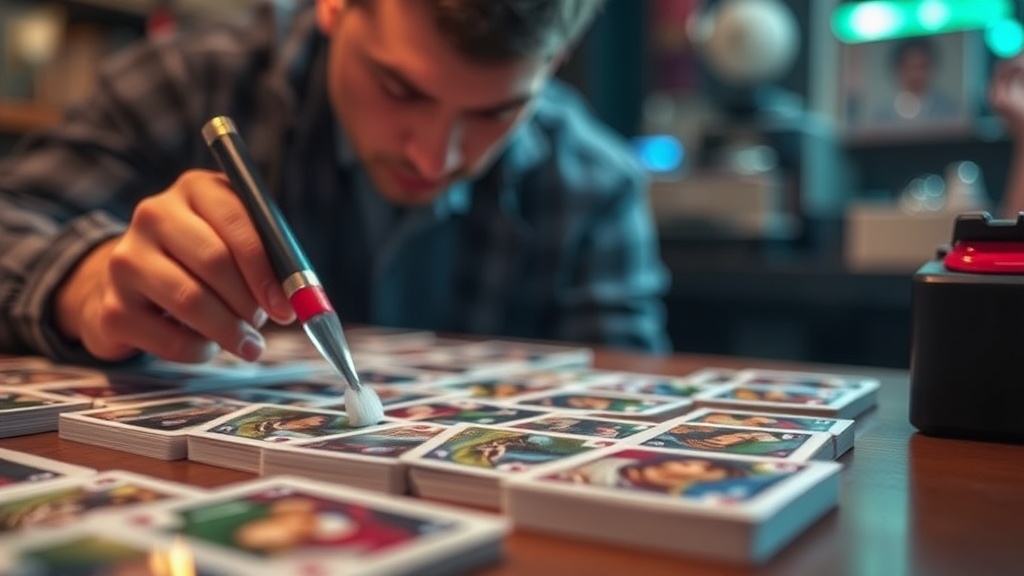
Bringing Back the Brilliance: Safe Cleaning for Your Valued Trading Cards

Why Even Consider Cleaning Your Trading Cards?
Have you ever pulled out a cherished trading card, only to find it marred by a faint smudge or a stubborn speck of dust? It's a common dilemma for collectors: to clean, or not to clean? This guide will walk you through the careful process of safely cleaning your trading cards, exploring what you can—and absolutely shouldn't—do to preserve their integrity and even enhance their appearance for display or grading purposes. Understanding these nuances can make a significant difference, protecting your investment and ensuring your prized possessions look their best.
The impulse to clean a card is understandable. We want our collectibles to look pristine, especially if we’re considering them for display, sale, or—most critically—professional grading. A stray fingerprint, a bit of lint, or a light surface smudge can negatively impact a card's visual appeal and, subsequently, its potential grade. Graders at institutions like PSA (Professional Sports Authenticator) evaluate cards as they're submitted; they aren't going to wipe off a dust particle for you. So, a minor, non-permanent surface imperfection could knock your card down a grade point, costing you significant value. That's why a careful, informed approach to cleaning isn't just about aesthetics; it's about safeguarding your investment. However, there's a fine line between a careful clean and an irreversible alteration. Knowing that line is key.
What Tools Do You Truly Need for a Safe Card Cleaning Session?
Before you even think about touching a card with anything other than a soft sleeve, you need to gather the right arsenal of tools. This isn't a job for household cleaners or abrasive cloths; we're talking surgical precision here. The wrong tools can easily turn a minor blemish into a permanent scratch or, worse, irreversible damage. So, let’s get prepared with the essentials:
- High-Quality Microfiber Cloth: This is your primary weapon. It needs to be new, clean, and specifically designed for delicate surfaces like eyeglasses or camera lenses. Why new? Because even a seemingly clean, used cloth can harbor tiny dust particles or grit that will act like sandpaper on your card's surface. Think of it as a fresh start for every session.
- Nitrile or Cotton Gloves: Your skin produces oils, and those oils leave fingerprints—exactly what we're trying to avoid! Wearing gloves, either nitrile or cotton, prevents this transfer. They also provide a better grip, reducing the chance of dropping a precious card.
- Compressed Air: A can of compressed air is fantastic for dislodging loose dust and debris before any wiping begins. A quick, directed burst can remove particles that would otherwise be dragged across the card by your cloth, potentially causing micro-scratches. Just make sure to hold the can upright to prevent propellant discharge.
- Bright Light Source: A good, adjustable desk lamp is invaluable. It helps you clearly see surface imperfections, dust, and smudges that might be invisible in ambient light.
- Magnification (Jeweler's Loupe or Magnifying Glass): A loupe or magnifying glass (10x magnification is usually plenty) lets you inspect the card's surface up close. You can identify the type of smudge, confirm if it's truly removable, and check for any existing micro-scratches before you begin. This pre-inspection is a critical step in deciding if a cleaning attempt is even warranted.
- Card Stand or Soft Mat: A stable, soft surface to work on is important. A dedicated card stand helps you hold the card steady without constantly touching its surface, while a soft mat (like a playmat) protects the card if you accidentally set it down.
What about liquids? This is where extreme caution comes in. For almost all trading cards, especially vintage paper ones, liquids are an absolute no-go. For modern, glossy, or 'chrome' cards, some collectors might suggest "huffing"—breathing gently on a small, specific area to create a tiny bit of condensation—but this is a high-risk maneuver, and we generally advise against it unless you are extremely experienced. The safest approach is always dry cleaning first.
How Can You Safely Tackle Different Types of Surface Grime?
The method you employ depends heavily on the card type and the nature of the imperfection. Not all cards are created equal in terms of durability. Modern "chrome" or glossy cards (think Topps Chrome, Prizm) are far more resilient to light cleaning than delicate, porous vintage paper cards. Always err on the side of caution.
For Modern Glossy/Chrome Cards:
These cards often have a protective, glossy coating that can withstand very gentle, dry wiping. This is where you'll see the most success with surface cleaning.
- Initial Dust Removal: With your gloves on, give the card a few gentle bursts of compressed air from about 6-8 inches away. This gets rid of any loose dust that could cause scratches during wiping.
- Gentle Wiping: Take your clean microfiber cloth. Start with very light pressure in the center of the card and gently wipe outwards towards the edges in a circular or straight motion. The key word here is *gentle*. You're not scrubbing; you're coaxing the smudge off.
- Edge Caution: Be incredibly careful around the card's edges and corners. The cloth can easily catch on them, causing whitening, fraying, or even minor chipping. This is a common mistake that can instantly lower a card's grade.
- Stubborn Smudges (Extreme Caution): If a smudge persists, some seasoned collectors might *very carefully* breathe on the spot to create a tiny bit of moisture, then *immediately* and *gently* wipe with the microfiber cloth. This is a last resort and not recommended for beginners. The risk of moisture damage or leaving a residue is high. Never, under any circumstances, spray liquids directly onto the card. You can find more detailed guidance on this from reputable grading companies like PSA, who have specific considerations for pre-grading preparation, though they stress avoiding anything that constitutes alteration. Check their